
14.02.2020 15:26
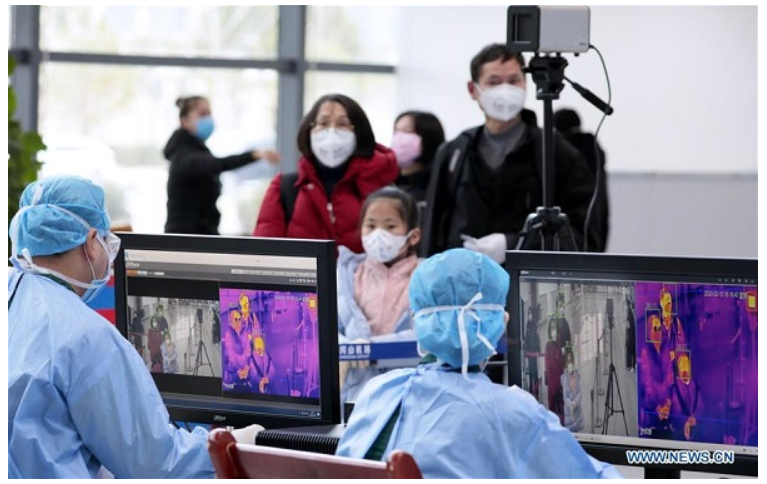
The novel coronavirus pneumonia epidemic is noticeably slowing down in China, with Hubei province, the center of the outbreak, recording the lowest number of new infections since late January and the rest of the country seeing the total confirmed cases decline for eight consecutive days.
?
Health experts have predicted that the peak of the epidemic will soon occur — maybe as early as middle to late February — if measures aimed at reducing population movement and expediting the isolation of infected patients continue to be stringently implemented.
?
The number of existing infections on the Chinese mainland rose by 2,015 to 38,800 on Tuesday, and the death toll went up by 97 to 1,113, according to the National Health Commission.
?
Compared with the daily peak of 3,887 new cases reported on Feb 4, the number of new infections on Tuesday has decreased by 48.2 percent, commission spokesman Mi Feng said on Wednesday.
?
The number of new suspected cases on Tuesday was 3,342, down 37.3 percent from the peak on Feb 5, and the recovery rate for infected patients jumped to 10.6 percent on Tuesday from a low of 1.3 percent on Jan 27, he added.
?
Hubei recorded 1,638 new confirmed cases on Tuesday, with 94 new fatalities. This is nearly half the peak of 3,156 new cases on Feb 4 and is the lowest number of new infections in 11 days, according to the provincial health commission.
?
In the Tibet autonomous region, the only confirmed patient of the virus has recovered and was discharged from the hospital on Wednesday, making the autonomous region the only provincial-level area in China without any confirmed or suspected infections.
?
Zhong Nanshan, a renowned respiratory expert who leads an official panel advising on controlling the virus, said on Tuesday that the epidemic will peak in middle or late February, followed by a plateau, and decrease again to end by April.
?
“Although in Wuhan, it (the situation) keeps changing, in other places like Guangdong and Zhe-jiang provinces, the number of newly diagnosed patients is gradually going down. That’s good news,” he said during an interview with Reuters.
?
Zeng Guang, chief epidemiologist at the Chinese Center for Disease Control and Prevention, said on Wednesday that the ongoing slowdown started around Feb 5 when new infections outside Wuhan began dropping.
?
But he warned that the epidemic could rebound as an estimated 160 million people return to workplaces following the end of the Spring Festival break, with the Yangtze River Delta, the Pearl River Delta and the Beijing-Tianjin-Hebei region — key engines of the country’s economy — at the highest risk of seeing a surge in infections.
?
“The enormous number of people on the way are usually clustered in enclosed spaces, increasing the risk of virus transmission,” he said in an article published on his microblog on Sina, adding that “arduous efforts and refined measures” should be implemented.
?
“Whether the rebound will occur and its scale is closely related to the implementation of each area’s prevention work. After overcoming this barrier, we will be one step closer to making an objective prediction on the end of the battle,” he wrote.
?
Wang Guiqiang, head of the infectious disease center at Peking University’s First Hospital, also told Xinhua News Agency this week that the epidemic’s peak will soon come into sight as long as patients in Hubei are effectively quarantined and nationwide cases are detected rapidly.
?
Concerns addressed
?
As scientists are striving to unmask the novel coronavirus, some reports concerning the virus’s transmission path, incubation length and the test kit’s accuracy have caused concern among the public.
?
In response to online reports that the virus’s incubation period could be as long as 24 days based on a study from a research team headed by Zhong Nanshan, Zhong said on Tuesday that the prolonged incubation was found in only one of a total of 1,099 patients they had studied.
?
The median incubation period stands at about four days, he said.
?
Concerning aerosol transmission, which refers to the mixing of the virus with droplets in the air that cause infection after inhalation, Wang from Peking University’s First Hospital said that wearing masks in small, unventilated areas can protect against such infection, and the possibility of aerosol transmission is very low in outdoor spaces.
?
“As for the false negative results of nucleic acid testing, we have updated the treatment guideline by replacing throat swabs with nasal swabs to increase precision,” he said, adding that the nature of the virus determines that it is difficult to ensure the full accuracy of test results.
?
National Health Commission of the PRC
 滬公網安備31010402000451號